BackTalk: Merry Clayton, Carrying the Chorus (Interview)
01 August 2013 — by Brett Milano
Merry Clayton is living proof that you can have a glorious career without becoming a household name. In fact, her name wasn’t even spelled right on her biggest moment of mainstream glory, the Rolling Stones’ “Gimme Shelter”: Though pregnant and bedridden when the Stones called her into an overnight session, she sang the verse that gave the song its drive and its dread. And for years people thought her name was “Mary” Clayton, since the first pressings of Let It Bleed credited her that way.
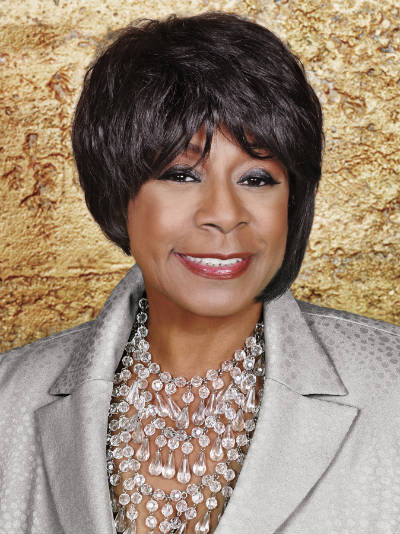
Merry Clayton (Photo: Alan Mercer)
But that was only 45 seconds’ worth of a career that’s spanned five decades. As a backup singer Clayton toured as a teenager with Ray Charles, then sang on hit albums by Carole King and Lynyrd Skynyrd. And as a solo artist she cut a string of early-’70s albums that gave some familiar rock material (including her own version of “Gimme Shelter”) a progressive-funk slant; playing to an open-minded niche that barely existed at the time. Much of that material has just seen its first CD reissue on The Best of Merry Clayton (CBS/Legacy).
Now Clayton’s career is seeing another revival, as she’s the arguable highlight of Morgan Neville’s film in praise of backup singers, Twenty Feet from Stardom. She was in town for its local premiere at the Joy Theater in April, and spoke to us last month from her home in Los Angeles. We started by talking about her childhood in New Orleans.
What memories do you have of Mahalia Jackson? I know that you knew her and that she was a mentor when you were a child…Yes. Mahalia was a friend of my dad’s, and they had been friends, since they were from New Orleans, from the ’30s or ’40s. And any given Sunday, you’d look up and Mahalia would be there, and I’d automatically go and sit with her. And I’d find myself nestled in a pew with Mahalia, leaning on her shoulder to probably go to sleep, and then on my left would be Linda Hopkins, and I’d put my feet up on Linda Hopkins, and I’d nestle myself between these two women. Apparently something rubbed off because as I grew older I would mimic Mahalia. Everything she would sing, I would sing. So then they started calling me “Little Haley.”
So how did you get drawn into the world of pop and rock and roll music? You made your first records when, in ’62 and ’63?Yeah, I was a teenager and I started doing recording sessions. I met Darlene Love through her sister Edna Wright, who later on became the lead singer of the Honey Cone [“Want Ads”]. Darlene must have heard me on a program or something at church, and she thought I could really sing. So she asked my mom if she could take “Baby Sister”—that’s what they were calling me at the time—to the studio, and see if I could do some session work. And they would come and pick me up.
My first session that I did was with Bobby Darin. But I didn’t know anything about singing in the studio back then. I knew how to sing in church, but I hadn’t been versed on how you blend with other voices. And during this session, Bobby Darin kept turning around and saying “Darlene, who is that singing so loud?” So I backed away from the mic and sang it again, and Bobby Darin kept turning around and telling me to be quiet. We did it again so many times and I kept backing up every time. Before I knew it I had almost backed up out of the door, I was singing so loud.
Then about four months later, he needed someone to sing with him. And I think it was [producer/arranger] Jack Nitzsche who called my mother and said, “Can we have Merry sing on this song with Mr. Darin?” And she said, “Well, she’s just a kid, so there are a few conditions. Make sure she does her homework, and she has to take a nap.” We recorded this record called “Who Can I Count On If I Can’t Count On You?” That was the single.
Was there any flak for its being an interracial duet?Of course there was. I remember being played on [’60s deejay] Hunter Hancock’s radio station in Los Angeles. But they would never say who I was. They would just say it was Bobby Darin. But what Bobby did was introduce me at the Coconut Grove here in Los Angeles one night, and I went up and sang with him. And in the audience was the whole Rat Pack, and they just loved it.
You started touring with Ray Charles. You were a teenager at the time, right?I was actually almost 18. I got a call from Billy Preston, my childhood friend and brother, to come down and sing for Ray. I said “Ray who?” and he said “Ray Charles, drop everything and get to the studio.” So I put on my cutest outfit and went to Ray Charles’ studio, and Billy tells me to sing “It Won’t Be Long” by Aretha Franklin. And I started singing and Ray started rocking. He was loving what he was hearing. Ray asked me how old I am, when I told him he said he had to talk to my parents. He talked to them and Billy’s parents and asked if we could go with him out on tour to countries I’d only studied about. I’d never crossed the pond in my life. And at that time there was a gentleman named Curtis Amy who had just joined the band as Ray’s conductor.
Well little did I know that I would be married to him for 32 years, until he passed on several years ago. So I think that God allowed me to join that band, and the stars lined up so that I could meet my husband.
Did you ever get star struck? Was there anyone that you were intimidated by to sing with?It may sound kind of bold to say, but no. There was never anyone that I was intimidated to sing with. A lot of times that’s why I was called on, because I would sing with anybody. I always considered it an honor and a pleasure to be able to sing with any great artist. They may have been a little intimidated by me, you know.
You talk in the movie about the “Gimme Shelter” session, and having to ask who the Rolling Stones were. You really hadn’t heard of them?No, truthfully, I never had. I had heard of the Beatles because Billy Preston kept calling me about their new record label, Apple, telling me that I needed to get on this label. So I was getting ready for bed, I had on my beautiful pink silk pajamas my husband had just bought me the week before. I had the rollers in my hair and the lotion on my face. And I got a call from Jack Nitzsche, calling about the Rolling Stones. My husband said, “Here’s a fur coat,” and he put that on me and pulled a Chanel scarf out of a drawer and he put it on my head and I put on my mink coat and I’m out the door. And before I know it, I see these two guys coming out from the back of the studio, and it’s Mick and Keith. Keith looks at me and says “Hello, love,” and I say “Hello, love back to ya.”
We go in the studio and listen to the track, and I’m hurrying them up because I’m pregnant and I can’t be out all night. “War, children, it’s just a shot away” is playing and I think I can sing that fine. So we do a couple of those and then they showed me the lyrics to the next part were “rape” and “murder” and I said, “Hold it you guys. Who in the world are you raping and murdering? And why are y’all singing this?” And I come to find out, it was about war and racism and everything that was going on in the world at that time. It just seemed like everything that was going on in the world’s spirit came through my body when I was singing. You could just hear me screaming on that song. Screaming, “Please, what are you doing out there in the world? Why are you doing this? Why is this going on?” That’s part of what makes it such a powerful record.
You also recorded “Sweet Home Alabama” with Lynyrd Skynyrd. Did you feel the same sort of spirit when you recorded that one?Absolutely. I became very, very upset during that one. You can almost hear me singing through my teeth. I was thinking, “How dare you have me sing about Alabama when that’s the place where people are bombing schools and churches?” Alabama was a place that was very ugly at the time. It hurt me when I heard the lyrics. It became a protest song for me in a weird way.
I’ve always wondered what someone like you would feel when you turn on the radio and hear all the hit singles with auto-tuned voices.I wouldn’t feel well if someone told me they were going to auto-tune my voice. That would be an insult. How you gonna auto-tune perfection? How in the world are you gonna auto-tune what I’ve been doing all my life? The kids who are coming up now want to be instant stars. But you have to pay dues. You have to woodshed. You have to do all the sessions you can do. You have to play all the gigs you can to fine tune your instrument in order for you to become an artist. You don’t become an artist overnight.
http://www.offbeat.com/2013/08/01/merry-clayton-carrying-chorus-interview/#


 Pages: 1


 Merry Clayton TALKS BACK (Read 807 times)


