Welcome, Guest. Please Login or Register
 
YaBB - Yet another Bulletin Board
Home Help Search Login Register Broadcast Message to Admin(s)


Pages: 1 ... 15 16 17 18 19 ... 26
Send Topic Print
Keith Richards - Life (Read 128,167 times)
Tumbling Dijs
Rocks Off Regular
*****
Offline


The Stones in a club is
still the ultimate rush.

Posts: 356
Gender: male
Re: Keith Richards - Life
Reply #400 - Nov 3rd, 2010 at 4:03pm
Alert Board Moderator about this Post! 
Great Pictures, thanks! He really looks good without the eyeliner!
Back to top
 
 
IP Logged
 
lavendar
Rocks Off Regular
*****
Offline


Rocks Off Rules You Bastards

Posts: 1,075
Buffalo,NY
Gender: female
Re: Keith Richards - Life
Reply #401 - Nov 3rd, 2010 at 4:47pm
Alert Board Moderator about this Post! 
Such a Distinguished lookin Gent.

and a Very Handsome photo.
Oh no! not you again
Back to top
 
 
IP Logged
 
Ginda
Rocks Off Regular
*****
Offline


The ghost of Belle Starr

Posts: 926
WA State
Gender: female
Re: Keith Richards - Life
Reply #402 - Nov 3rd, 2010 at 5:00pm
Alert Board Moderator about this Post! 
Tumbling Dijs wrote on Nov 3rd, 2010 at 4:03pm:
Great Pictures, thanks! He really looks good without the eyeliner!


I agree - Keith looks much better sans eyeliner.  A nice change.
Back to top
 

"I am a friend to any brave and gallant outlaw"
 
IP Logged
 
left shoe shuffle
Rocks Off Regular
*****
Offline


Posts: 4,141
Re: Keith Richards - Life
Reply #403 - Nov 3rd, 2010 at 6:01pm
Alert Board Moderator about this Post! 

...

Nice little interview with Sky News.


"You embark yourself on this career and then you've got to be ready to rock and roll. And rolling is the most important..."

Back to top
« Last Edit: Nov 3rd, 2010 at 6:17pm by left shoe shuffle »  

...
 
IP Logged
 
Paranoid Android
Rocks Off Regular
*****
Offline


The Rocks Off Ladies Rule
You Bastards!!

Posts: 6,338
Chapel Hill, NC
Gender: male
Re: Keith Richards - Life
Reply #404 - Nov 3rd, 2010 at 9:14pm
Alert Board Moderator about this Post! 
Anybody get the JOHNNY DEPP audio version?

How is it?
Back to top
 

.........
 
IP Logged
 
Voodoo Chile in Wonderland
Unholy Trinity Admin
*****
Online


The Stones are back you
bastards!!!!

Posts: 17,948
Wonderland
Gender: male
Re: Keith Richards - Life
Reply #405 - Nov 3rd, 2010 at 11:17pm
Alert Board Moderator about this Post! 
paul wrote on Nov 3rd, 2010 at 3:39pm:
Egon wrote on Oct 29th, 2010 at 3:06am:
Gazza wrote on Oct 28th, 2010 at 3:00pm:
Keith's 1-hour interview on 'The Culture Show' just now on BBC was very good. Some footage in it I wasnt familiar with, too.

Concentrated almost exclusively on the period up to the late 60s, but was pretty well done and Keith was on good form.


can we watch that online anywhere?

edit:

seem some people can:

http://www.bbc.co.uk/iplayer/episode/b00vll85/The_Culture_Show_Keith_Richards_A_...

not in France though...


For those that live outside the UK i have uploaded the show here
http://www.megaupload.com/?d=U119D9D0


The first five minutes is missing (i forgot to set the recorder) but it was only about his childhood.
Single file download, 269 mb use VLC media player to watch.


Thanks a LOT HTM! You rock
Back to top
 

I only get my rocks off while I'm sleeeeeeeeeeeeeeeeeeeeeeeeeeeeeeeeping with your girlfriend!!
WWW gerardo.liedo rocksoffmessageboard  
IP Logged
 
FotiniD
Rocks Off Regular
*****
Offline


ROCC & RO..ll...

Posts: 1,021
Athens, Greece
Gender: female
Re: Keith Richards - Life
Reply #406 - Nov 4th, 2010 at 3:04am
Alert Board Moderator about this Post! 
Paranoid Android wrote on Nov 3rd, 2010 at 9:14pm:
Anybody get the JOHNNY DEPP audio version?

How is it?


I've pre-ordered it and still waiting, but there's a very sweet sample featuring both Keith and Johnny at amazon.co.uk:

http://www.amazon.co.uk/gp/product/1409124746/ref=oss_product

Can't wait  Cool
Back to top
 
FotiniD  
IP Logged
 
paul
Rocks Off Regular
*****
Offline


Rocks Off Rules You Bastards

Posts: 91
England
Gender: male
Re: Keith Richards - Life
Reply #407 - Nov 4th, 2010 at 7:03am
Alert Board Moderator about this Post! 
http://www.bbc.co.uk/6music/news/20101104_keith.shtml

Another BBC interview. Keith says the Stones will tour again next year, well sort of,maybe.
Back to top
« Last Edit: Nov 4th, 2010 at 7:24am by Voodoo Chile in Wonderland »  
 
IP Logged
 
left shoe shuffle
Rocks Off Regular
*****
Offline


Posts: 4,141
Re: Keith Richards - Life
Reply #408 - Nov 4th, 2010 at 10:18am
Alert Board Moderator about this Post! 

"Everybody's ready to go out there again. Who said it should stop, and who said when?"

Cool
Back to top
« Last Edit: Nov 4th, 2010 at 10:26am by left shoe shuffle »  

...
 
IP Logged
 
left shoe shuffle
Rocks Off Regular
*****
Offline


Posts: 4,141
Re: Keith Richards - Life
Reply #409 - Nov 4th, 2010 at 10:18am
Alert Board Moderator about this Post! 

Keef: 'Mick and I are still close'


Thu Nov 4 2010

...
ITN


Rolling Stones guitarist Keith Richards insists he and frontman Mick Jagger are still the best of friends.

Richards reveals all about the pair's rocky relationship in his new autobiography Life.

Launching the book in Central London, the legendary rocker said he had given the singer a preview copy and there was no rift between the two over occasionally scathing remarks that appear in the pages.

He said: "Mick and I are like that, you know. And we've said far worse about each other. I really cleaned it up.

"Guys don't work together for 50 years almost without having the odd contre-temps."


Watch the interview @ ITN
Back to top
 

...
 
IP Logged
 
PartyDoll MEG
Rocks Off Regular
*****
Offline


Just one drink from your
lovin' cup

Posts: 3,127
Re: Keith Richards - Life
Reply #410 - Nov 4th, 2010 at 1:54pm
Alert Board Moderator about this Post! 
Paranoid Android wrote on Nov 3rd, 2010 at 9:14pm:
Anybody get the JOHNNY DEPP audio version?

How is it?

I don't do audiobooks.. I like the written word better..but I am listening to Johnny right now....It is great when Johnny quotes Keith or anyone else....
Back to top
 

.........
 
IP Logged
 
left shoe shuffle
Rocks Off Regular
*****
Offline


Posts: 4,141
Re: Keith Richards - Life
Reply #411 - Nov 4th, 2010 at 2:29pm
Alert Board Moderator about this Post! 

Stray Cat Blues


By LIZ PHAIR
Published: November 4, 2010

This review will appear in the Nov. 14 Book Review.


...
Illustration by Yuko Shimizu


He’s been a global avatar of wish fulfillment for over four decades and managed to eke more waking hours out of a 24-hour day than perhaps any other creature alive (thanks, Merck cocaine and amphetamines!). As Keith puts it: “For many years I slept, on average, twice a week. This means that I have been conscious for at least three lifetimes.”

You better believe it. This cat put the joie in joie de vivre. As the legendary guitarist for the Rolling Stones, Keith Richards has done more, been more and seen more than you or I will ever dream of, and reading his autobiography, “Life,” should awaken (if you have a pulse and an I.Q. north of 100) a little bit of the rock star in you.

“If you want to get to the top, you’ve got to start at the bottom,” he says, “same with anything.” Born in 1943 to parents who met as factory workers, Keith was raised in Dartford, an industrial suburb of London. Through the marshes behind the many “lunatic asylums” that seemed to populate Dartford in disproportionate numbers, Keith learned what it felt like to be helpless and afraid, serving as a daily punching bag for bullies on his way home from school. By the time he fought back and won, he’d discovered a fury in himself for which he would later become infamous. The plight of the underdog was his passionate crusade, and anyone or anything that represented injustice in his eyes was fair game. Kate Moss recounts a hilarious anecdote from 1998 in which Keith, sidestepping the festivities of his daughter Angela’s wedding at his manor house, Redlands, finds he’s short some spring onions he laid on a chopping block while fixing himself a light nosh of bangers and mash. When the thieving guest totters into the kitchen with the greens playfully tucked behind his ears, Keith grabs two sabers from the mantelpiece and goes chasing after the poor guy in a homicidal rage. I won’t even touch on the incident involving shepherd’s pie.

Music is at the core of “Life,” as it is at the core of Keith. His grandfather Gus, patriarch of the bohemian family on his mother’s side, played a pivotal role in developing Keith’s love and respect for music. They took long walks together, sometimes all day, talking about the world and stopping at various establishments where Gus, ushered into a back room by his hosts, would leave the young Keith outside, with time to ponder his grandfather’s mischievous and gamboling private life. Gus had been a sax player in a dance band in the ’30s and knew just how to get a young boy interested in a musical instrument. “I’ll never forget the guitar on top of his upright piano every time I’d go and visit, starting maybe from the age of 5,” Keith says. “I thought it was always there. And I just kept looking at it, and he didn’t say anything, and a few years later I was still looking at it. ‘Hey, when you get tall enough, you can have a go at it,’ he said. I didn’t find out until after he was dead that he only brought that out and put it up there when he knew I was coming to visit.” Keith’s first guitar, bought when he was 15, became so much a part of him he was rarely without it, sleeping with his arm draped across its body like a girlfriend: his primary relationship.

Keith’s values were set early and have remained consistent to a remarkable degree. Disloyalty is about as low as you can go in his book, one step lower, even, than screwing up the music. Women? Take ’em. Vices? First round’s on me! But never, ever, EVER cross a mate. It’s an idea born of his Boy Scout days as head of the Beaver Patrol. He found he had a knack for marshaling troops, leading by example and rarely pulling rank. (For parents keen on enrolling their children in wholesome activities to secure a respectable future and avoid exactly what became of Keith Richards, keep in mind: he was a choirboy, too.)

It’s only after Keith’s been kicked out of technical school that he hits his stride as a musician, obsessively studying Chess Rec­ords artists of the ’50s like Chuck Berry, Bo Diddley, Willie Dixon, Muddy Waters and John Lee Hooker. His old school pal Mick Jagger shares his passion for Delta blues, and soon they form a band whose nascent lineup will become the Rolling Stones.

Musically, these are the formative years. Keith learns to play against the silence, to make what isn’t there as audible as what is, standing on the shoulders of the American blues greats. He marvels: “It wasn’t loud, necessarily, it just came from way down deep. The whole body was involved; they weren’t just singing from the heart, they were singing from the guts.” He describes his style: “I find myself trying to play horn lines all the time on the guitar. . . . If it’s an A chord, a hint of D. Or if it’s a song with a different feeling . . . a hint of G should come in somewhere, which makes a seventh, which then can lead you on. Readers who wish to can skip Keef’s Guitar Workshop, but I’m passing on the simple secrets anyway, which led to the open chord riffs of later years — the ‘Jack Flash’ and ‘Gimme Shelter’ ones.”

Believe me, you won’t want to miss a thing. The most impressive part of “Life” is the wealth of knowledge Keith shares, whether he’s telling you how to layer an acoustic guitar until it sounds electric, as he did on the classic Stones track “Street Fighting Man,” or how to win a knife fight. He delivers recipe after recipe for everything rock ’n’ roll, and let me say it’s quite an education.

In 1964, the year of the British Invasion, when both the Stones and the Beatles  broke big in America, Keith and the band had been touring for a while in Britain, sharing the stage with colorful characters like Little Richard  and the Ronettes, whose lead singer, Ronnie Bennett (later Ronnie Spector), was one of Keith’s early romances. The Stones cut their teeth on the road, starting in 1963: “Between then and 1966 — for three years — we played virtually every night, or every day, sometimes two gigs a day. We played well over a thousand gigs, almost back to back, with barely a break and perhaps 10 days off in that whole period.” It was a lifestyle that would lead Keith toward drugs as a way to cope with its extremity.

Nineteen sixty-four was also a year of great cultural shifts: the burgeoning youth culture, the civil rights movement and the early antiwar protests all intersected in the irreverent personas of the Rolling Stones. They were white, but sounded black. They played American music, but came from England. They dressed like women and didn’t cut their hair, yet every­one’s wife, girlfriend or daughter went mad for their raw sexuality. Worst of all, they remained resolutely lax about the strictures of the law. As Bobby Keys, Keith’s best friend and the sax player on some Stones records, tells it, “The American music scene, the whole set of teenage idols and clean-cut boys from next door and nice little songs, all that went right out the . . . window when these guys showed up!”

One theme in the book that really stuns is the extent to which Keith Richards has been pursued by the police on nearly every continent for the duration of his career. They’re pulling over buses, battering down doors and hanging out of trees trying to get a charge that will stick to music’s most notorious and, thus far, ne’er-long-incarcerated bad boy. The archetype of the rock ’n’ roll antihero is, by now, a familiar image. What is shocking to remember is that Keith himself invented it. It’s obvious he just doesn’t give a damn about the rules the rest of us live by.

The book opens with a Keystone Kops-worthy caper in which Keith, his bandmate Ronnie Wood and a friend are busted in Arkansas while on tour in 1975, all three of them flinging drugs off their persons like spigots in the Trevi Fountain, attempting to rid themselves of illegal substances before they are searched. Neither the hunters nor their prey play their parts well in this farce. Keith and his companions are too stoned to dodge the incoming, and the authorities too compromised by the heady publicity of it all to get the job done. It’s a dilemma that proves to be an enduring asset for the Stones: “The choice always was a tricky one for the authorities who arrested us. Do you want to lock them up, or have your photograph taken with them and give them a motorcade to see them on their way?”

As their popularity grows, so does their stardust. “Suddenly we were being courted by half the aristocracy, the younger scions, the heirs to some ancient pile, the Ormsby-Gores, the Tennants, the whole lot. I’ve never known if they were slumming or we were snobbing.” It’s a blue-­collar fairy tale, but distance between Mick and Keith begins to steadily expand — so much so, Keith confesses, that “I haven’t gone to his dressing room in, I don’t think, 20 years.” The Glimmer Twins, once so close Keith claims they had “identical taste in music,” now get caught up in the drug-fueled circus that defines middle-­period Rolling Stones, the late ’60s and early ’70s. These are the golden years, the years of “Sticky Fingers” and “Beggars Banquet,” when excess converges with success in such a way as to make it all seem causal. But a certain guest at the party makes quite an impression and stubbornly refuses to leave: heroin.

Keith’s drug habit progresses, but he moves into one of the most prolific writing periods of his career. He and Mick compose most of the songs for “Beggars Banquet,” “Let It Bleed,” “Sticky Fingers” and “Exile on Main Street” while Keith is under the influence. Pulled by the poppy and pushed by cocaine, Keith acquires a taste for working unholy hours in the studio that damn near kill his colleagues. He goes round the clock and considers it mutiny if anyone toiling with him leaves the deck. “I realized, I’m running on fuel and everybody else isn’t. They’re trying to keep up with me and I’m just burning. I can keep going because I’m on pure cocaine . . . I’m running on high octane, and if I feel I’m pushing it a little bit, need to relax it, have a little bump of smack.” He’s trying to impress upon his readers not the foolishness of this diet but rather the impossibility of its being replicated, since drugs of this caliber are no longer available, and few have the discipline to stick to the recommended doses. No wonder Johnny Depp modeled his “Pirates of the Caribbean” character, Capt. Jack Sparrow, on this rakish and tippling taskmaster.

Around this time, Keith hooks up with the Rolling Stones’ answer to Yoko Ono: Anita Pallenberg. She and Keith fall for each other hard while she’s still the girlfriend of his bandmate Brian Jones. Keith takes pains to describe what an ass Brian was at the time, falling prey to the vanity of fame, as a way to excuse himself. And indeed, Keith levies the same complaint against Mick Jagger, offering a diagnosis of L.V.S., or “lead vocalist syndrome.” In regard to their differing approaches to the pressures of stardom, he says: “Mick chose flattery, which is very like junk — a departure from reality. I chose junk.” Mick and Anita end up having an affair while thrown together on the set of the film “Performance,” and Keith makes sure to give as good as he got, sleeping with Marianne Faithfull, Mick’s main squeeze at the time, behind his back. “While you’re missing it, I’m kissing it,” Keith says with boyish glee, adding: “It probably put a bigger gap between me and Mick than anything else, but mainly on Mick’s part, not mine. And probably forever.”

If Keith weren’t such a brilliant character, the reader might weary of his hypocrisy. But the truth is, he’s hilarious. I got tired of jotting “hahahaha” and “LOL” in the margins. James Fox, Keith’s co-­author, deserves a lot of credit for editing, organizing and elegantly stepping out of the way of Keith’s remembrances. Reading “Life” is like getting to corner Keith Richards in a room and ask him every­thing you ever wanted to know about the Rolling Stones, and have him be completely honest with you. Here’s how he describes recording: “Well, I’ve got to tame this beast one way or another. But how to tame it? Gently, or give it a beating? . . . I’ll take you twice the speed I wrote you! You have this sort of relationship with the songs. . . . You ain’t finished till you’re finished, O.K.? . . . No, you weren’t supposed to go there. Or sometimes you’re apologizing: I’m sorry about that. No, that was certainly not the way to go. Ah, they’re funny things. They’re babies.”

Keith and Anita have three children together, but their 2-month-old son, Tara, dies while Keith is away working. The pain will stay with him forever. At the time, Marlon, his elder son, is on the road for a spell with his dad, providing a light at the end of the tunnel for Keith, who deals with these tough emotions in the midst of a bacchanalia on overdrive. According to Marlon, there was never anything that crazy on tour. This is where the two photo sections really tell the story: a beautiful shot of Keith, wind in his hair, turning his back on the crowd, barely conscious, and another of Keith rolling off the jetway into his private limo, Jack Daniel’s in hand, with all the self-­assurance of the heir apparent, flanked by a beefy, uncomprehending, and likely disapproving, fleet of drivers. “We had become a pirate nation,” he says about the 1972 American tour, “moving on a huge scale under our own flag, with lawyers, clowns, attendants.”

Money is the dark matter of the Rolling Stones’ universe, warping and shifting things from the background. In the lean years, Keith would double-string his guitar so the strings would last longer. Later, as the money came in fast and thick, more serious consequences followed mistakes they made, like blindly signing a contract drawn up by their manager Allen Klein that caused them to lose millions. Klein, Keith says, “ended up owning the copyright and the master tapes of all our work — anything written or recorded in the time of our contract with Decca. . . . He got the publishing of years of our songs and we got a cut of the royalties.” There was more trouble as they tried to climb out of the financial hole Klein had dug for them in England: “We were in the ludicrous situation where Klein would be lending us money that we could never afford to repay because he hadn’t paid the tax and anyway we’d spent the money. The tax rate in the early ’70s on the highest earners was 83 percent, and that went up to 98 percent for investments and so-called unearned income. So that’s the same as being told to leave the country.” Heading for Villa Nellcôte in France, the Stones record perhaps their most critically acclaimed album, “Exile on Main Street.”

One glorious image from this period is of Keith driving his speedboat, Mandrax, across the crystal blue waters of the Mediterranean, out for a morning cruise with his mates: “We would record from late in the afternoon until 5 or 6 in the morning, and suddenly the dawn comes up and I’ve got this boat. Go down the steps through the cave to the dockside; let’s take Mandrax to Italy for breakfast. . . . No passport, right past Monte Carlo as the sun’s coming up with music ringing in our ears.”

The Stones record “Goats Head Soup” in Jamaica, and after the session’s over, Keith and family decide to stay on. He immerses himself in Rasta culture, fascinated by reggae music and its defiant political tradition. “They’re not going to work for Babylon; they’re not going to work for the government. For them that was being taken into slavery.” He finds renewed inspiration in the hybrid musical form and takes pride in being accepted. Though it’s his capacity to tolerate marijuana  in large doses that initially endears him to the Rastafarians, it’s easy to see how Keith’s core values harmonize with this way of life. He may be famous, but first and foremost, he’s a musician.

Notable names tramp through Keith’s remarkably preserved memory by the dozens, almost too ubiquitous to lend an impact. John Lennon makes a cameo, hunched over a toilet after having tried to keep up with Keith. When Bob Marley is described as a Johnny-come-lately, you know you’re dealing with the crème de la crème. There are poignant moments, too, tossed out with no more windup than the chuck of one’s car keys to a valet, like this insightful gem about Ronnie Wood: “Ronnie is the most malleable character I’ve ever met and a real chameleon. He doesn’t really know who he is. It’s not insincere. He’s just looking for a home. He has a sort of desperation for brotherly love. He needs to belong. He needs a band.”

Keith and Anita’s relationship runs aground, and he falls in love with the sunny Patti Hansen, finally an influence of stability and relative restraint in his life. They have two daughters, Alex­andra and Theodora, and Keith begins to clear his head of drugs and take stock of his career. Frankly, he has the time. “Brenda,” as he calls Mick, has gone off to do a solo project with which Keith takes great umbrage, believing it an unparalleled betrayal of their principles and the pact they made when they formed the Rolling Stones. “Mick had become uncertain, had started ­second-guessing his own talent. . . . He forgot his natural rhythm. I know he disagrees with me. What somebody else was doing was far more interesting to him than what he was doing. He even began to act as if he wanted to be someone else.”

Keith’s response is to dive headlong into a project of his own, sinking deeper roots as a rhythm and blues guitar player in the X-Pensive Winos. He loves putting together a dream team of guys he’s always wanted to work with, and takes to the stage as if it were a fresh pursuit. But neither Mick nor Keith can escape the fact that they are better together than alone. People feel a certain way about the music that first made them feel a certain way about themselves. In the end, Mick and Keef are like an old married couple, trading sharp jabs but devoted.

After Keith falls out of a tree in 2006 and incurs a life-threatening hematoma, he receives get-well wishes from world dignitaries, Tony Blair included: “Dear Keith, you’ve always been one of my heroes.” Keith does a double take: “England’s in the hands of somebody who I’m a hero of?” For the original antiestablishment bad boy, it’s hard to believe how far he’s come: “The streets named for us only a few years after we were being shoved up against the wall.”

“I’m not here just to make records and money,” he says. “I’m here to say something and to touch other people, sometimes in a cry of desperation: ‘Do you know this feeling?’ ” The irony is, his feeling of fighting the world is exactly what the world loves so much about Keith: he did it his way.

The New York Times


Nice review from Ms. Phair, and very cool illustration by Yuko Shimizu.
Back to top
« Last Edit: Nov 4th, 2010 at 2:43pm by left shoe shuffle »  

...
 
IP Logged
 
Heart Of Stone
Rocks Off Regular
*****
Offline


Rocks Off Rules

Posts: 4,001
Charlottetown Prince Edward Is
Gender: male
Re: Keith Richards - Life
Reply #412 - Nov 5th, 2010 at 9:23am
Alert Board Moderator about this Post! 
A friend told me there's a audio version of Keith's Life book on BT Junkie for downloading narrated by Johnny Depp, looked into this & came up with.
http://www.daemonsbooks.com/2010/10/28/johnny-depp-narrates-audiobook-version-of...

http://www.openculture.com/2010/11/johnny_depp_narrates_new_keith_richards_autob...
Back to top
 

The Rolling Stones ain't just a group, their a way of life-Andrew Loog Oldham.
......[URL=http://s6.photobucket.com/user/merrillm123/media/69inLA.jpg.html]
WWW Merrill Moran  
IP Logged
 
moy
Rocks Off Regular
*****
Offline


Rocks Off Rules You Bastards

Posts: 1,270
Mars
Gender: female
Re: Keith Richards - Life
Reply #413 - Nov 5th, 2010 at 9:56am
Alert Board Moderator about this Post! 
This is by journalist Bill Wyman not our Bill


Please Allow Me To Correct a Few Things

Mick Jagger responds to Keith Richards about his new autobiography.
By Bill Wyman
Posted Friday, Nov. 5, 2010, at 7:15 AM ET
http://www.slate.com/id/2273611/

Editor's note: On a recent morning, the journalist Bill Wyman received a UPS package containing a typed manuscript. On reading it, he saw that it seemed to be the thoughts, at some length, of singer Mick Jagger on the recently published autobiography of his longtime songwriting partner in the Rolling Stones, Keith Richards. A handwritten note on an old piece of Munro Sounds stationery read: "Bill: For the vault. M."

From this, Wyman surmised that the package was intended for Jagger and Richards' former bandmate, the bassist Bill Wyman, who has assiduously overseen the band's archives over the past five decades and with whom Wyman the journalist coincidentally shares the same name. Wyman the journalist, a longtime rock critic, was once threatened with a cease-and-desist letter from Wyman the bassist's Park Avenue attorneys and felt no compunction about perusing the contents of the package. The manuscript he received is reprinted below.

I am, I see here, marginally endowed, if I read Keith's sniggering aright. I do not sing well, either. I am not polite to employees; indeed, I have even been known to say, "Oh, shut up, Keith," in band meetings. I do not appreciate the authenticity of the music or the importance of what we do. I want to "lord it over" the band, like James Brown. I am "insufferable." I slept with Anita.

Most of that is in just the first quarter of this overlong book, but a tattoo of my failings sounds all through it and culminates in almost 20 full pages of rambling invective near the end.

I don't mind this, really, for reasons I hope are understandable and will get into later. This is all from a guy pushing 70 for whom gays are still "poofters" and women "bitches." I think so many things about Keith. We were close, the two of us, for many years. We had known each other in grade school, if you can believe it, in the same undistinguished eastern suburb. Then we bumped into each other in a train station at 18 or so and started talking about the blues. We were different; I'd already been on TV with my father, who was a fairly notable expert on physical education at the time. Keith was … rougher, let's say. For the next nearly 10 years, we were rarely apart. Even after we were famous, we lived at each others' flats or houses. We were still very young, and, like puppies, we'd cluster together.

We were barely a band before our lives changed, but I think still of the time we spent, squalidly, before we were a group, in a very cold and small flat, more filthy than you can imagine. Our flatmate Jimmy Phelge was a veritable comic virtuoso with a pair of soiled underwear. Certainly we—I—wanted to be famous, but can I point out our road to it was not absurd, exactly, but unthinkable, in the sense that we couldn't even imagine a way to do it? The London music scene was entirely insignificant, and we didn't even play the trad jazz (Charlie's métier), which dominated.

Still, we practiced day and night out of some unspoken impetus, innocent suburban boys abruptly living quite near the edge of a dark milieu. This brings me to Brian, who played guitar very well and was a brittle devil. We knew that because of many things, not least that he spent an inappropriate amount of time beating up his girls in the next room. I'm not proud of that. Keith gives himself (too much, I think) credit for rescuing Anita, eventually, from Brian; but that of course was years later. Earlier, we both listened to or watched his cruelty, in the bedroom and elsewhere; we paid no attention to the half-dozen kids he'd fathered and ignored the savagery he accomplished on tour. We didn't know better; we were priapic jackals ourselves, fucking even one another's girlfriends if they got left, as it were, unattended. But it was wrong to have let Brian do that, and Keith should have owned up to this in the book.

I supposed it is a karmic justice for Brian that we continued to watch as he descended from there to hell, harried by the police and increasingly incapacitated artistically, which further estranged him from us. Oh, that's not true; we didn't just watch. We ushered him along, ridiculing him, you might say, to death as he began to lose his ability to contribute. Again, we were young. What were you doing at 25? We didn't know about depression, insanity, addiction, or what acid might have done to him. It's unclear to me whether the drugs diminished his ability to contribute or whether the drugs were in effect a way to cover up something that wasn't there. The first song Keith and I wrote was a hit single; Brian couldn't write a song to save his life, literally. And let's remember that he was a total asshole.

I'm digressing but I'm trying to explain where we came from. We didn't have a template. Nothing against Steven Tyler, but there's a difference. We felt around in the dark; we were famous within weeks; and, in the end, we left a body or two behind us. We did these things, good and bad, together; we were friends.

The second important thing is Keith's talent. We took it for granted, in a way, as he says. We felt it was our duty to get together and write a song, one good song each day we worked. He is kind to say I could take what he gave me and run with it. But he is the one who gave me the actual song to write the lyrics to. He wrote a dozen Top 10 hits in five years, and, after the band added Mick Taylor and essentially grew up, he wrote most of Beggars Banquet and Let It Bleed. Again: What were you doing at 25? It's interesting to me how no previous song we'd recorded would have a respectable place on those albums; and any song on them would have seem out of place even on Aftermath or Between the Buttons. Keith's lurch forward was amazing. As a pure rock (not folk or pop) songwriter, I think he is not just without peer. I think he is unrivaled in depth and growth, from "As Tears Go By" to "Satisfaction" to "Jumping Jack Flash" to, I don't know, "Gimme Shelter. " "Monkey Man." "Street Fighting Man." The primal feel of the chording. The musicality of the intros and breaks. The innovation of the recording—cruder, no doubt, but I will argue far more emotionally powerful than the Beatles'. The winding, intermixed guitars he almost desperately loved. Without him, what would I have been? Peter Noone? It is hard to use a word like integrity about a band as compromised, as self-bloodied, as we were. But for some years, unlike any other group, the Beatles included, we declared war on that silly, hypocritical, repressive, and arbitrary society in which we lived. The only ammunition we had were Keith's songs. The lyrics, I confess now, may have been in their defiance just épater la bourgeoisie and in their poesy derivatively Zimmerman-esque. Even when they weren't, no one would have paid attention if the chords weren't arresting, irrefutable. The songs spoke primarily through their music, not their words. Keith's doting fans nattering on about the ultimate avatar of rock 'n' roll authenticity irritate me, it's true; but he may to this day be underappreciated.

So those two things I think, are important. Our bond; his talent. We blink at that point, and go 40 years forward, and he has written a book that says, essentially, that I have a small dick. That I am a bad friend. That I am unknowable.

The reviewers, who idolize Keith, don't ask why this is all in here. We have rarely spoken of such things publicly, and tangentially even then. We don't talk about it in private, either, and, no, he hasn't been in my dressing room in 20 years. I thought we both learned that there is no point in sharing anything at all with the press, save a few tidbits for the upbeat The Stones are back in top rocking form! article that accompanies each of our tours. I think Keith never appreciated the tedious hours I had to spend with Jann Wenner to accomplish that.

But I know why it is all here.


In the book we get the stories.

Oh, the stories. The rock, the girls. The car wrecks, the arrests. You read them on the printed page, delivered in what, I must admit, is a pretty fair written representation of Keith's slightly tangential, drawling, effeminate delivery, resting charmingly just this side of the incomprehensible.

I was generally made familiar with the stories in a different context. They were generally related by an assistant or a lawyer, tour manager or a publicist, poking their head into a room. Keith's disappeared. Keith's asleep backstage and can't be roused for the show. No one will wake him because he keeps a loaded gun under his pillow and grabs it and points when riled. Keith fell asleep in the studio again. No, Keith isn't mixing the album. He flew off to Jamaica, and, no, we don't know when he will be back. Keith's asleep. Keith's asleep. Keith's asleep.

The scamp. Those are but one tier, and a fairly innocuous one, of the many times I was vouchsafed news of my partner. The next tier is more colorful. Keith (or his favorite sax player/drug runner/drug buddy/hanger-on) has slugged a photographer/destroyed a hotel room/gotten into a fistfight with the locals/fallen into a coma. Oh, yes, and the police are here. (Because police are whom you want backstage at a rock concert or at a recording studio.)

Or: The bandmate Keith personally vouched for is freebasing again. This last was of some interest to me, because it meant that I got to sing at a stadium backed by not one but two guitarists falling over onstage. Keith likes to talk a lot about his getting clean from heroin. It is not correspondingly apprehended that he replaced the heroin comprehensively with liquor. Given a choice I select the slurring alcoholic over the comatose junkie as a lifelong professional partner, and I say this with some knowledge of the two alternatives. But neither is strictly desirable.

And, yes, they do fall over onstage. (Or asleep on a chair in the studio.) I laugh at it now and blame no one but myself. Why, Keith gave me his "personal guarantee" Woody would not be freebasing on tour.

And yet I was surprised when it happened. I take the point that professionalism, one's word, rock 'n' roll merriment … these are fungible things in our world. It is a fair charge that I have become less tolerant in these matters over the decades. In our organization, inside this rather unusual floating circus we call home, I am forced into the role of martinet, the one who gets blamed for silly arbitrary rules. (Like, for a show in front of 60,000 people for which we are being paid some $6 or $7 million for a few hours' work, I like to suggest to everyone that we start on time, and that we each have in place a personal plan, in whatever way suits us best, to stay conscious for the duration of the show.)

So I will take that point. All of the forgoing was just … a little outré behavior on tour. Let's go to the next tier—again, of matters one is informed of with some regularity, this not over months, not years, but entire decades. Keith's been arrested with a mason jar full of heroin and a shopping bag full of other drugs and drug paraphernalia and is charged with drug trafficking. That was his baggage for a weekend in Toronto. It is hard to play a show with a catatonic guitarist, harder still when he is in jail for 10 years. I won't even get into the fact that this came right when I had every record label in the world fighting to sign us, and in an instant my negotiating power was vaporized. Here's a baroque bulletin from the archives: Anita's 17-year-old boyfriend has accidentally shot himself, in Keith's house—Keith's bedroom—with a gun Keith left lying around. Young Marlon, then perhaps 10, saw Anita, covered in blood, coming down the stairs distraught, and God knows it could have been Marlon playing with the gun. Or: Keith's driven his car off the road (again) with Marlon inside (again). In his book Keith stands back, amazed at the things that just … happen to him. He is frequently the victim of faulty wiring in the hotels in which we bivouac; a surprising number of times this phenomenon has caused fires. Ritz-Carltons are not built the way they use to be, I guess. Redlands burned down a couple of times as well, as did a house he was renting in Laurel Canyon. It's a wonder Marlon survived his childhood. A third child Keith disposed of by sending her off to his mum back in Dartford I to raise. The second? That was another son, who was left with his paranoid, unstable, heroin-addict mother and didn't make it past infancy. Keith says he blames himself, and on that at least I think we can agree.


It is said of me that I act above the rest of the band and prefer the company of society swells. Would you rather have had a conversation with Warren Beatty, Andy Warhol, and Ahmet Ertegun … or Keith, his drug mule Tony, and the other surly nonverbal members of his merry junkie entourage? Keith actually seems not to understand why I would want my dressing room as far away as possible from that of someone who travels with a loaded gun. And for heaven's sake. No sooner did Keith kick heroin than Charlie took it up. In the book Keith blames me for not touring during the 1980s. I was quoted, unfortunately, saying words to the effect of "the Rolling Stones are a millstone around my neck." This hurt Keith's feelings. He thinks it was a canard flung from a fleeting position of advantage in my solo career, the failing of which he delights in. He's not appreciating the cause and effect. Can you imagine going on tour with an alcoholic, a junkie, and a crackhead? Millstone wasn't even the word. I spent much of the 1980s looking for a new career, and it didn't work. If I had it to do over again I would only try harder.

When I came back I resolved to do at least something well. Which brings us to money. We did not entirely mismanage our career in the 1960s, save for the calamity of signing with Allen Klein, who, with fatal strokes of our pens, obtained the rights and total control of our work throughout the 1960s. It was my responsibility. Keith downplays this, but the fact is we signed the thief's papers. It was all done legally. Klein was a Moriarity, truly; he didn't wait to sign us to steal. The signing was the theft, a product of a scheme so encompassing that in the end, he paid us a pittance and walked off with our songs. This is by far the single most important nonmusical event in our history, and yet it is rarely remarked on. I was not 30 and had lost us a historic treasure.

In the 1970s, we worked very hard, and with Some Girls we eventually sold a lot of records, but in reality you couldn't make much money back then, even touring. In the early 1970s we might play for a period of, say, two months, 10,000- and 20,000-seat halls at $6 or $10 a ticket. Back then, we were lucky to take half the gross home. You do the math. Then take out expenses and manager and lawyer fees ... and split the remainder five ways. Nor did we live frugally. It got better over the decade, and Keith and I had the songwriting, of course, but compare us with Paul or Elton during the 1970s (who outsold us by many times, for starters, and among other things did not split their income with anyone) and our fame was entirely inconsistent with our back accounts.

In 1981, I put us in stadiums and charged a more reasonable tariff and might have made us more money that summer than we'd earned in our entire career up to that point. And I've done it several times since—each time, I mean, to be precise, literally earning close to as much as we had the previous 30 or 40 years in total, including those previous tours. The Bigger Bang outing grossed more than $588 million—more than a million dollars a day for 18 months—and we pocketed the lion's share of it. If the promoters didn't like it they could raise price of the nachos, or the parking. And I'm not even mentioning the sponsorships, the ticket fees, the merchandise …

I sound, now, like the accountant who earns my bandmates' jeers. But I don't remember Keith complaining about these sums, or, incidentally, that it took me 20 years to remember to give Ronnie a full share, just as we both pretended not to hear when Mick Taylor, or Ronnie, asked for credit for songs they'd written.

Does Keith really sigh for the good old days on tour? Shabby theaters, shitty sound? Wound-up kids standing for hours in the hot summer sun in dreadful mid-American cities waiting for a chance to race recklessly for general-admission seats? Us enduring a day of hassle and travel to take home perhaps $3,500 each? I remember Keith asleep or not showing up until hours after the scheduled start time. Our feral fans running, fighting, throwing rocks at police. Today, the shows start promptly, there are video screens for the folks in the back, and we offer $1,000-a-seat ducats for the fat cats.

Here's the thing: I'm a rock star. What is the measure of my success if not the biggest rock and roll tour of all time?

I know what you're thinking. It's what Keith thinks, too.

What about the music. Isn't it all, in the end, about the music?


I must note that the Stones rarely get a bad review, no matter how poor our albums. (Jann again, and so many wannabe Janns; how is it that we somehow manage, again and again, to record our "best album since Some Girls"?)

But let me ask you to imagine yourself, as I was, unimaginably, partnered with the writer of "Satisfaction," "Paint It Black," "19th Nervous Breakdown," "Honky Tonk Woman," etc. And then imagine that your partner, seemingly overnight, lost some essential part of his talents.

Not, as is commonly supposed, sometime perhaps in the 1980s, when the Rolling Stones' decline in creativity was on obvious display, but earlier. A lot earlier. Like, say, 1972 at the latest.

Those who like Exile on Main St. like its denseness, its mystery, its swampy commitment. Accidentally and amid no little chaos, we conjured up something dirty, impenetrable, and, in parts, compelling. But I think its murk promises depths that aren't there. There are decent but no major songs on Exile. Let's go back an album, to Sticky Fingers. I wrote "Brown Sugar." Mick Taylor wrote "Sway" and most of "Moonlight Mile," and made "Can't You Hear Me Knocking" his own. Keith and I together did most of the rest, like "Wild Horses," but, in the end, he didn't write most of the thing's best songs.

From there, there's Exile. Some nice tracks— "Rocks Off," "Happy"—but there is no "Gimme Shelter" or "Let It Bleed." Chords that once threatened society in some significant now way rarely radiated outward.

The next few years were difficult. I don't want to say Keith wrote no songs. He did. But successively, in each album, the process became more difficult, as both his capacity for the job declined along with the quality of what he did write. He mocks the disco songs—"Hot Stuff," "Miss You," "Emotional Rescue." But what would the commercial impact of those albums have been without those immediate hits? We were being outsold by everyone from Supertramp to the Doobie Brothers as it was. At the same time I had to come up with tracks and weasel promising material out of our cohort and not give up songwriting credit, which I accomplished in all but one or two cases.

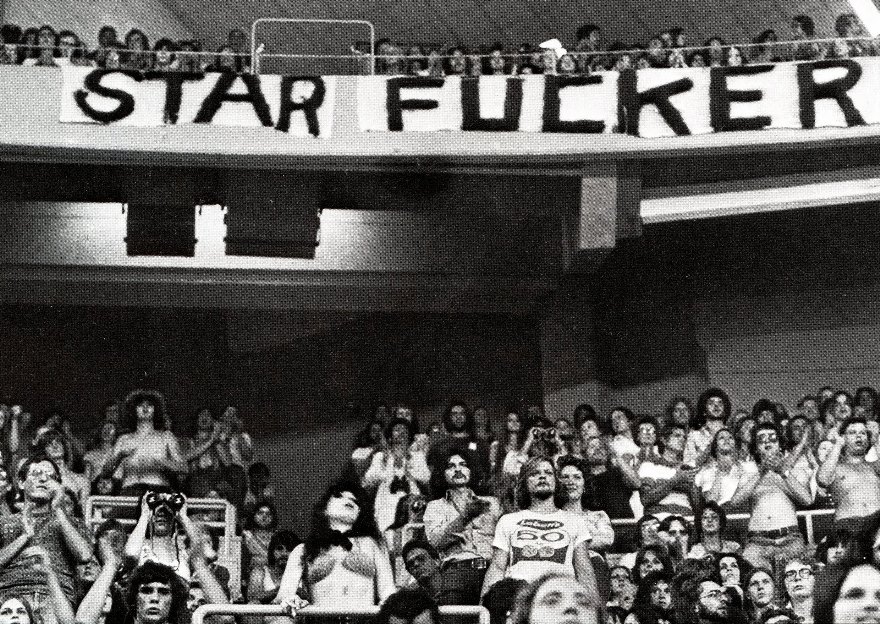
The resulting albums are, with perhaps the exception of Some Girls, flaccid and unconvincing. The aforementioned disco hits. A little lyrical naughtiness ("Starfucker," "Some Girls"). The earnest ballad in which the incorrigible Stones display some unexpected touches of maturity ("Memory Motel," "Waiting on a Friend"). Lots and lots of undistinguished filler, clavinet playing by Billy Preston, Motown covers … And for some of the good stuff Keith wasn't even there. For It's Only Rock and Roll I did the title single with Woody and Bowie. Taylor and I constructed the splendid "Time Waits for No One," a fantasia, alluring to this day, for percussion, piano, and guitar. (I don't think Keith has ever let us play it live.) ("Sway," either.)

I will testify that Keith was intermittently sentient during some part of the recording of Some Girls. Yes we were fully Manhattanized at this point, because I live here and that's what I found interesting. The geographic location of Keith's talent, being nowhere, wasn't available for evocation.

By the time of Tattoo You I was exhausted. Entirely drained of ideas. I told Chris Kimsey to ransack the archives. "Start Me Up" was a very old song, with some 20, 30, 40 takes as a reggae ... and one with a real rock guitar. It turned out to be our last real hit, and the arc of our career would look a lot different if we hadn't found it. With it, we could plausibly least claim to be hitmakers in the 1980s. "Waiting on a Friend," that symbol of our new-found maturity, was, if memory serves, from a centuries-old session with me and Mick Taylor. About our work from the rest of the 1980s and 1990s, the less said the better. Can you sing a single chorus from Dirty Work? Name a single track? We certainly don't play songs from those records in concert if we can help it.

I go into such detail to describe the arc of our decline accurately but also note this sad corollary: Keith brought something out of me, way back when. Through Exile, I felt I had to rise to his songs. When he checked out creatively, I lost something important. While there is some spark, I guess, in "Some Girls" or "Shattered" or whatever, however contrived, I know most of the other songs sucked. In the 1980s and '90s it got worse. I could conjure up only the most banal cliché or the most pretentious polysyllabic nonsense. Compare "Sympathy for the Devil" with "Heartbreaker." One Godard made a film about. The other is a TV movie. I literally wrote a song called "She's So Cold" and then, a few years later, one called "She Was Hot."

Now, Keith went through the same thing. I think this is why Keith lost himself with heroin and now drinks: to stave off the pressure to match himself and dull the knowledge that he can't any more (and, back then, couldn't). It's trite, maybe, but there's a reason a guy spends a decade in a haze, and the three decades since in a stupor. Keith's rancor is almost entirely based on the fact that it was not, in the end, easy to keep the appearances of what in the public mind is the Rolling Stones, and the process wasn't always pretty. But I did it, and, among other things, to this day it is hardly in the public mind that Keith Richards hasn't written a significant rock 'n' roll song in nearly 35 years.

For that I get Keith's book.

Why did he write it? Or, rather, having decided to write it all down, why did he devote so much of it to carping about me?

Well, he's not talking about me, really. He's just trying to get my attention, I think, in the end. The remaining part of the rancor comes from the fact that he knows he lost me, many years ago. It's funny—Keith doesn't write good rock songs much any more, but what he does do, every four or five years, is craft a beautiful little ballad. Since Tattoo You Keith's written and sung a couple of tracks per album. (We had a huge fight about his putting three on Bridges to Babylon; I didn't like it, but didn't have anything else to offer, even with three years since the previous album. Why one of the songs I did write is now co-credited to k.d. lang is a matter to be discussed on some other day. ) Generally, one of these is a throwaway, and the other ... is something gorgeous. Put them all together along with songs he wrote solo and sang from the early years—"You Got the Silver," "Happy," and so forth, all the way up to "Thru & Thru" and "All About You"—and you have a CD of no little power and emotion. (I've done it.)

These songs are more honest than his book. In "The Worst," he says something about "I'm the worst kind of guy/ For you to be around." That's a song that might ring true for many people. It makes me think about how Keith lost me only after I lost him. In an older song, he explains a worldview I find a bit disturbing, and I would like to point out that since from most peoples' perspective I have flirted the edge of total decadence my entire life I can make that observation with some authority:

Slipped my tongue in someone else's pie
Tasted better every time
She turned green and tried to make me cry
Being hungry
Ain't no crime

Again, the honesty is bracing. I think Keith puts just about any of his manifold urges on a par with hunger, and I think we can agree the world would be a dangerous place if that was the norm. It explains many, many of his actions over the years. In the book he tells the story of going to meet Patti Hansen's parents for the first time—drunk, holding an open bottle of Jack, and with one of his fucktard friends in tow. You can imagine how the evening ended. I'm sure Keith thinks it's OK. ("Being nervous ain't no crime.") ("Oh, shut up, Keith," I think.) With that perspective—and the added benefit of being rich and famous and having most of his deplorable actions do nothing but burnish his image—Keith's way in the world has been, in a certain way and ignoring, for the moment, the people who died, a blessed one.

I certainly bless it. I stood by him and propped him up and didn't fire his ass for many, many years. It would have ended the Stones, of course, so maybe I was being selfish. In a way, even comatose he had a marquee name; as my meal ticket, you might say, it suited me to let him doze. I took the reins until, when he finally woke up, he found that he had no place in the management. He's angry about that, too. Yes, let's let Keith Richards have a hand in overseeing an operation that generates $1 million a day in revenue. I don't know what else I could have done. Later, one grows older and becomes more informed about such things, and I saw I was supposed to have held an elaborate ceremony called an "intervention." Society could have effectively halted the upheavals of the 1960s simply by requiring all of us to "intervene" with one another. In any event, considering half our circle was on heroin and the rest were coke fiends, I think it wouldn't have efficacious in our circumstances.

He talks about me, too, in his solo songs, less subtly: "I'm so sick and tired/ Of hanging around/ Jerks like you." People ask me why I let him put these on the album. I think: Oh, why not? It's a great song, and he can sing it, and he can write the book, too. He's trying to get my attention. To connect. To have it be how it once was. At our age, I think there's no basis for it. Keith celebrates his own unchanging character, and I have had quite enough of that.

But, still, when I think of Keith, I think sometimes of how someone different from the book comes out through these songs. Once in a great while he detaches and looks down at his corporeal self. "I think I lost my touch," he sings on one of them; "It's just another song and it's slippin' away." Rock and roll is strange. When a song is beautiful—those spare guitars rumbling and chiming, by turns—the words mean so much more, and there, for a moment, I believe him, and feel for him.

Or I think about "How Can I Stop" which may end up being Keith's last great song.

"How can I stop … once I start?" he murmurs, over and over again. "How can I stop once I start?"

It's about rock 'n' roll, of course, and playing guitar, and his tenure, and mine, in our unusual coalition. It's also about heroin and everything else he can't stop ingesting. But again it's about Keith himself, who once started never did stop—through the fame, the songs, the concerts and the women and the drugs; and the violence and senselessness, the addictions and the deaths, the ruined lives, the petty and large-scale cruelties. At the end Keith got Wayne Shorter to do a sax solo that is itself almost an out-of-body experience, perhaps the loveliest moment on one of our records. It goes on and on over the last two minutes of a very long track, and the end is almost a … an exaltation, perhaps? I am lost there. It's something I'm not sure I ever saw evidenced in real life, and something that isn't in his book. It's the sound—or at least the closest thing Keith Richards will ever admit to it—of a conscience.
Back to top
 
 
IP Logged
 
LadyJane
Rocks Off Regular
*****
Offline


Stones Purist

Posts: 4,929
Gender: female
Re: Keith Richards - Life
Reply #414 - Nov 5th, 2010 at 10:53am
Alert Board Moderator about this Post! 
Is this for real??
I find it hard to believe Mick would take the time to write such a LONG and detailed "rebuttal".

Interesting.................
Back to top
 

...
 
IP Logged
 
left shoe shuffle
Rocks Off Regular
*****
Offline


Posts: 4,141
Re: Keith Richards - Life
Reply #415 - Nov 5th, 2010 at 11:09am
Alert Board Moderator about this Post! 

Thanks for posting, moy.

Authentic or not - doubtless the latter - a very well written and thought provoking read by a journalist who knows his facts.  

Back to top
« Last Edit: Nov 5th, 2010 at 11:58am by left shoe shuffle »  

...
 
IP Logged
 
Ginda
Rocks Off Regular
*****
Offline


The ghost of Belle Starr

Posts: 926
WA State
Gender: female
Re: Keith Richards - Life
Reply #416 - Nov 5th, 2010 at 11:25am
Alert Board Moderator about this Post! 
If Mick didn't write this he should have.  Right on, well said, and about fucking time.
Back to top
« Last Edit: Nov 5th, 2010 at 11:36am by Ginda »  

"I am a friend to any brave and gallant outlaw"
 
IP Logged
 
paul
Rocks Off Regular
*****
Offline


Rocks Off Rules You Bastards

Posts: 91
England
Gender: male
Re: Keith Richards - Life
Reply #417 - Nov 5th, 2010 at 11:53am
Alert Board Moderator about this Post! 
What a load of rubbish. Of course Mick never wrote it, i doubt he would waste his time. Infomatively written, but pointless.
Back to top
 
 
IP Logged
 
polytoxic
Rocks Off Regular
*****
Offline


Rocks Off Rules You Bastards

Posts: 226
Re: Keith Richards - Life
Reply #418 - Nov 5th, 2010 at 12:13pm
Alert Board Moderator about this Post! 
It's fiction - the journalist Bill Wyman cops to it in his comments section - but it's well done.
Back to top
 
 
IP Logged
 
gimmekeef
Rocks Off Regular
*****
Offline


Posts: 5,759
Ontario Canada
Gender: male
Re: Keith Richards - Life
Reply #419 - Nov 5th, 2010 at 12:32pm
Alert Board Moderator about this Post! 
actually very introspective....well written and extremely interesting approach......reading it however sadly reminds me of how close to the end we really are
Back to top
 

"Runnin Like A Cat In A Thunderstorm"
 
IP Logged
 
LadyJane
Rocks Off Regular
*****
Offline


Stones Purist

Posts: 4,929
Gender: female
Re: Keith Richards - Life
Reply #420 - Nov 5th, 2010 at 12:41pm
Alert Board Moderator about this Post! 
gimmekeef wrote on Nov 5th, 2010 at 12:32pm:
actually very introspective....well written and extremely interesting approach......reading it however sadly reminds me of how close to the end we really are


True, gk, but think how AMAZING it is that in spite of all of the drama between these two, they have remained a working band for 50 years!!

I have always said we are the luckiest fans on the Planet and I feel moreso now.

One more tour to cap it off will be PURE ICING for me. I will treasure any and every show I am lucky enough to attend.

I suddenly feel a lump in my throat.
Back to top
 

...
 
IP Logged
 
left shoe shuffle
Rocks Off Regular
*****
Offline


Posts: 4,141
Re: Keith Richards - Life
Reply #421 - Nov 5th, 2010 at 12:53pm
Alert Board Moderator about this Post! 

Of course this "story" is now all over the interwebs...

Mick Jagger Responds To Keith Richards’ “Life”


...

With relatively little fanfare, considering, Slate has posted the Rolling Stones’ Mick Jagger’s response to “Life” the recent autobiography by Stones’ guitarist Keith Richards. Though it purports to have been “accidentally” mailed to music journalist Bill Wyman rather than its assigned destination, the Stones bassist of the same name, some might find that little piece of serendipity a bit hard to swallow.  

Regardless, its a fascinating window into the two artist’s history together and a compelling read.  Jagger writes with a flowery, highly literate style, and spares no one his criticism and occasional disgust.  

— Jon Behm

reviler.org


...
Back to top
« Last Edit: Nov 5th, 2010 at 1:07pm by left shoe shuffle »  

...
 
IP Logged
 
gimmekeef
Rocks Off Regular
*****
Offline


Posts: 5,759
Ontario Canada
Gender: male
Re: Keith Richards - Life
Reply #422 - Nov 5th, 2010 at 12:57pm
Alert Board Moderator about this Post! 
LadyJane wrote on Nov 5th, 2010 at 12:41pm:
gimmekeef wrote on Nov 5th, 2010 at 12:32pm:
actually very introspective....well written and extremely interesting approach......reading it however sadly reminds me of how close to the end we really are


True, gk, but think how AMAZING it is that in spite of all of the drama between these two, they have remained a working band for 50 years!!

I have always said we are the luckiest fans on the Planet and I feel moreso now.

One more tour to cap it off will be PURE ICING for me. I will treasure any and every show I am lucky enough to attend.

I suddenly feel a lump in my throat.


LJ you are so right....it's just that the Stones have been so huge in my life for all of those 50 years since I was 10 and chose them as my band. Guess theres a bit of my own mortality seeping in too and hoping this great ride has a few more hair raising curves left.......
Back to top
 

"Runnin Like A Cat In A Thunderstorm"
 
IP Logged
 
Gazza
Unholy Trinity Admin
*****
Offline


Rat Bastid      "We piss
anywhere, man.."

Posts: 13,231
Belfast, UK
Gender: male
Re: Keith Richards - Life
Reply #423 - Nov 5th, 2010 at 1:33pm
Alert Board Moderator about this Post! 
LadyJane wrote on Nov 5th, 2010 at 10:53am:
Is this for real??
I find it hard to believe Mick would take the time to write such a LONG and detailed "rebuttal".

Interesting.................


The use of the word 'fucktard' would suggest it may have been written by a certain right-wing DJ from New Jersey who frequents this parish.

Back to top
 

... ... ...
WWW https://www.facebook.com/gary.galbraith  
IP Logged
 
Gazza
Unholy Trinity Admin
*****
Offline


Rat Bastid      "We piss
anywhere, man.."

Posts: 13,231
Belfast, UK
Gender: male
Re: Keith Richards - Life
Reply #424 - Nov 5th, 2010 at 1:39pm
Alert Board Moderator about this Post! 

left shoe shuffle wrote on Nov 5th, 2010 at 12:53pm:
Of course this "story" is now all over the interwebs...

Mick Jagger Responds To Keith Richards’ “Life”


...

With relatively little fanfare, considering, Slate has posted the Rolling Stones’ Mick Jagger’s response to “Life” the recent autobiography by Stones’ guitarist Keith Richards. Though it purports to have been “accidentally” mailed to music journalist Bill Wyman rather than its assigned destination, the Stones bassist of the same name, some might find that little piece of serendipity a bit hard to swallow. 

Regardless, its a fascinating window into the two artist’s history together and a compelling read.  Jagger writes with a flowery, highly literate style, and spares no one his criticism and occasional disgust. 

— Jon Behm

reviler.org


...


Jesus wept. The publication of Keith's memoirs really has produced a race to the death amongst journalists on both sides of the Atlantic for the Utter Fuckwittery Stakes.
Back to top
 

... ... ...
WWW https://www.facebook.com/gary.galbraith  
IP Logged
 
Pages: 1 ... 15 16 17 18 19 ... 26
Send Topic Print
(Moderators: Gazza, Voodoo Chile in Wonderland)