In Obama's victory, Americans see legacy of Lincoln
Published: Sunday November 9, 2008
AFP
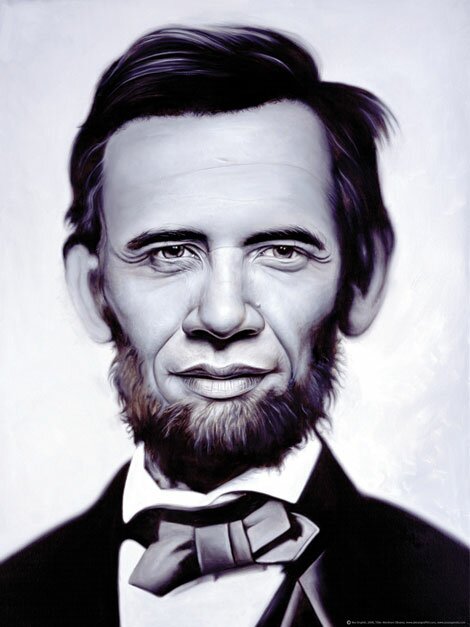
Sunken-cheeked, Abraham Lincoln casts a piercing gaze over Washington. A century and a half after his fight against slavery, Americans crowding the marble monument now see his legacy alive in the first black US president elect.
"Lincoln would be amazed that a person of color could become the leader of the free world," said Brian Andrews, 55, a black community worker, standing at the foot of the memorial by a board thick with handwritten messages congratulating Barack Obama on his election victory.
The columned Lincoln Memorial is dedicated to the country's 16th president, who opposed slavery and from 1861 battled to hold the country together in four bitter years of civil war as southern slave states fought to break away.
In the hours following Tuesday's election, it gained fresh significance for Obama's supporters, who flocked to leave messages of congratulation by the monument in the historic heart of the city which voted overwhelmingly for him.
Andrews sees Obama's mission as similar to Lincoln's.
"After the war he was the person who had to unite the country, saying we are the 'United' States. It's a similar kind of message to Obama's," he said, citing a common theme of the Democrat's campaign speeches.
Lincoln "had a lot of challenges ahead of him. The country was as messed up then as it is now."
Obama has named Lincoln as one of his heroes and told reporters on Friday, in his first news conference since winning the election, that to prepare for the presidency he had "reread some of Lincoln's writings, who is always an extraordinary inspiration."
In his book "The Audacity of Hope," Obama described being inspired by jogging to the memorial to read the inscriptions of Lincoln's speeches.
The two have been closely compared -- both were Illinois lawyers and senators with a knack for soaring prose, although the white 19th century leader, unlike Obama, called himself a Republican.
Obama cuts a similar lanky figure in a long overcoat, but he has yet to be seen in one of Lincoln's trademark stove-pipe hats.
Immediately after Tuesday's victory, Obama cited the historical hero in his speech to a sea of supporters in Chicago.
"We are not enemies, but friends. Though passion may have strained, it must not break our bonds of affection," Obama said, directly quoting Lincoln.
He expressed "determination to heal the divides that have held back our progress," echoing Lincoln's call, engraved on his memorial, "to bind up the nation's wounds."
"Tapping into Lincoln's memory in particular is setting the bar high," said Barbara Krauthamer, a history professor at the University of Massachusetts, Amherst.
"Lincoln is revered by so many Americans for his role in the abolition of slavery, and in saving the nation from disunity," she told AFP by telephone. "To claim that legacy and to quote that speech in his own presidential victory moment, I think really is an act of tribute and aspiration."
As Americans were killing each other in the bloody civil war, Lincoln in 1863 issued the Emancipation Proclamation that declared freedom for the southern slaves.
Congress passed the 13th amendment formally abolishing slavery in January 1865 -- the same year that Lincoln was assassinated early in his second term by a supporter of the south.
"It was African Americans who really freed themselves before Lincoln took the official steps," said Krauthamer. "Enslaved people ran away, and freed black people were protesting. Lincoln was really responding to that, rather than initiating that moment of black freedom."
In that light, she said, "there's something particularly poignant and triumphant now about having an African American president quoting Lincoln."
Despite abolition, decades of racial division followed, driving the civil rights movement in which Martin Luther King made his legendary "I have a dream" speech, standing on the steps below the statue of Lincoln himself.
"I think he would be happy" about Obama's election victory, said Crystal Laurence, a 39-year-old security guard at the memorial, staring up at the vast seated figure. "He freed the slaves -- everyone is equal."
"Lincoln would be in the top three greatest presidents," along with George Washington and Thomas Jefferson, said Brian Andrews.
"Those are the people who saved us. If you're quoting them, you're standing in very, very big shoes," he laughs. "But I think Obama will raise the bar. There'll be bigger shoes to fill after he's out."


 Pages:

 Obama elected President (Read 618,567 times)


